
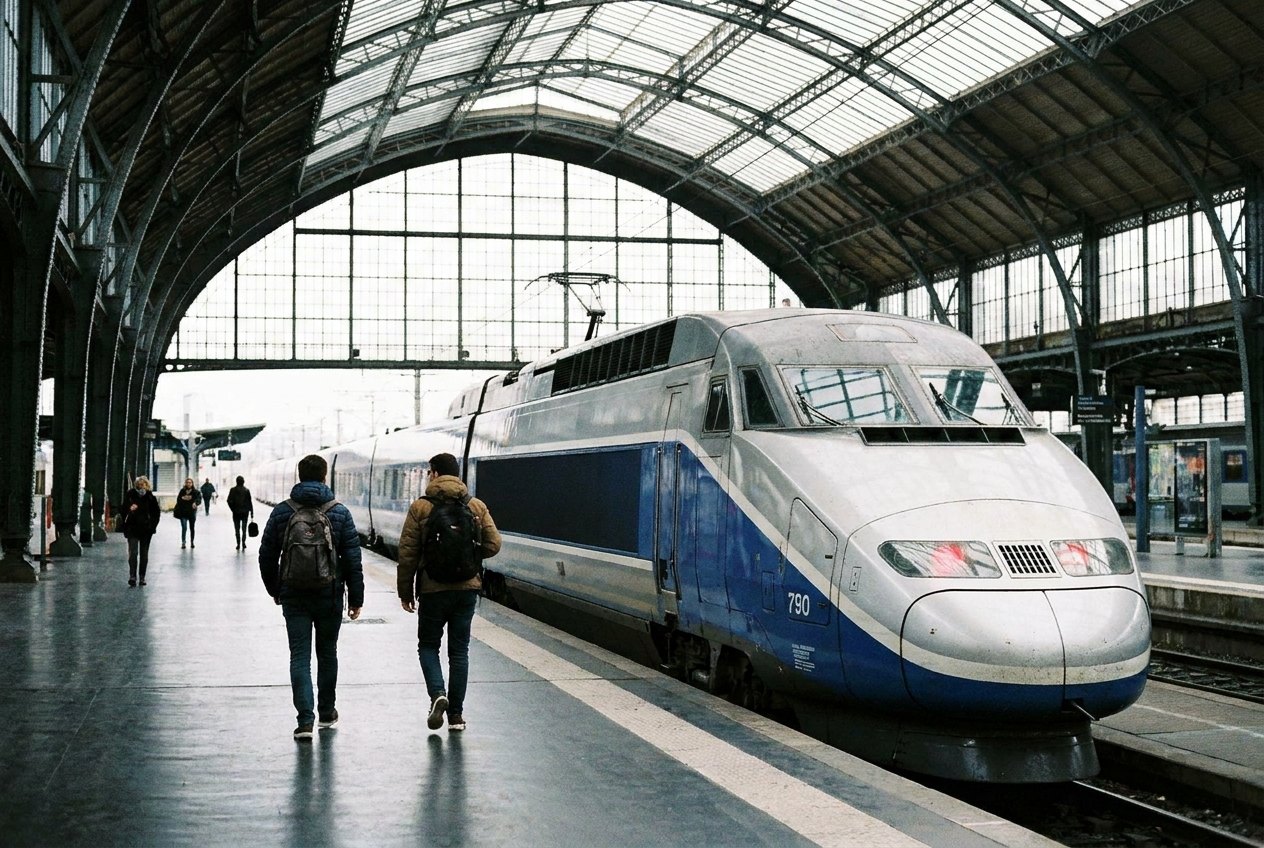
Worth knowingOn Italian regional trains, a paper ticket must be stamped in the machine on the platform before boarding; a digital one may need its own check-in.
Why the train suits a slower trip
In much of Europe, the railway station sits in the middle of town, a short walk from the old centre and the hotel. That alone makes the train a gentle way to travel: no drive out to an airport, no security queue, no long ride back in. You get on with your bag, sit by a window and watch farms, rivers and villages go by until the next town begins.
The network is dense, too. Fast trains link the big cities, regional trains stop at the smaller towns between them, and branch lines and buses reach places like Hallstatt or the five villages of the Cinque Terre coast. Once you understand a few habits, the system starts to feel easy.
Single tickets or a rail pass
There are two broad ways to pay. Point-to-point tickets cover one journey between two places. A rail pass covers a set number of travel days in one country or across many, within a period of time. Neither is always cheaper, and the answer depends heavily on your route.
Point-to-point tickets usually win for trips with only a few long journeys, especially when you can buy them ahead. Many national operators sell fast-train tickets at several fare levels, with the lower ones released early and limited in number. Regional train tickets, on the other hand, are often sold at a fixed fare and can be bought on the day.
A pass tends to make more sense for travellers who will cover a lot of ground, want freedom to change plans, or are travelling in a country where same-day tickets are expensive. Before buying one, price out your main journeys as single tickets and compare. Remember that some trains still need a reservation on top of a pass, and those reservations carry their own charge.
Seat reservations: when you need one
This is the part that catches people out. On many trains you simply board and sit in any free seat. On others, a reservation is compulsory, and you cannot travel without one.
| Type of train | Reservation |
|---|---|
| Most regional and local trains | Not offered or not needed |
| French TGV and Spanish high-speed trains | Required, usually included when you buy a ticket |
| Italian Frecciarossa and Italo trains | Required, part of the ticket |
| German ICE and Austrian Railjet trains | Optional, but useful on busy days |
| Night trains | Required for a seat, couchette or bed |
With a single ticket for a high-speed train, the seat usually comes with the ticket, and your coach and seat number are printed on it. With a pass, you book the reservation separately. Even where a reservation is optional, it is worth having one on a Friday afternoon, a Sunday evening or around a public holiday, when trains fill up and you may otherwise stand.
Even where a reservation is optional, it is worth having one on a Friday afternoon, a Sunday evening or around a public holiday, when trains fill up and you may otherwise stand.
Validating tickets on regional trains
Some countries ask you to validate a ticket before you travel, and inspectors can fine passengers who forget. Italy is the best known example. A paper regional ticket there is not tied to one train, so you stamp it in a small machine on the platform or in the station before you board. Digital regional tickets bought online may instead carry a set departure time or need checking in through the operator's system. Read what your ticket says.
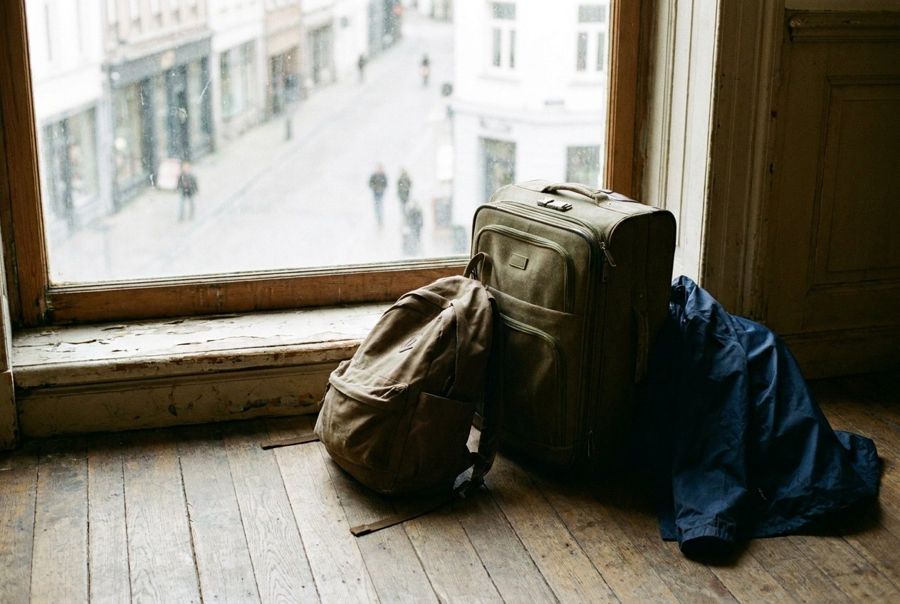 Pairs well withOne bag each, two weeks, no checked luggage
Other countries have their own rules. Some local transport networks, such as trams and buses in many cities, also ask you to validate on board. The safe habit is simple: whenever you hold a ticket that does not show a specific train and seat, look for a machine and ask yourself whether it needs stamping. If you board without a valid ticket by mistake, find the conductor straight away rather than waiting to be found.
Station habits that save the day
Arrive early enough to find the departure board, check the platform and walk to it without hurrying. In large stations the platform is sometimes shown only a short while before departure, so stay near the board until it appears. Note the train number as well as the destination, since several trains may be heading the same way.
- On long trains, find your coach before it arrives. Many stations, especially in Germany, Austria and Switzerland, show which sector of the platform each coach stops at.
- Check that the train you board is going to your station. Some trains split along the way, with different sections continuing to different places.
- Watch for steps. Many stations have lifts, but some smaller ones still have only stairs or a subway between platforms.
- Keep a little food and water with you. Not every train has a café car, and some that do close it early.
Strikes happen in several countries and are normally announced ahead. If one is planned on a travel day, check the operator's information and keep a backup plan in mind. The lesson of keeping an eye on your belongings also applies in busy stations, where crowds near the boards and the doors make it easy for a bag to wander.
Luggage on board
European trains have no checked baggage on ordinary services. You carry your bag on and stow it yourself, in the overhead rack, in a rack at the end of the coach, or in the space between back-to-back seats. A bag that fits overhead is the easiest, because it stays within sight. This is one of the strongest arguments for travelling with a single carry-on: you can lift it alone, and you will not be hunting for a scarce space for a big case.
When a stop is coming, gather your things a few minutes early and move towards the door. Stops at smaller stations are short, and doors may need a push of a button to open. Step down carefully, since there can be a big gap or a high step between the train and some older platforms.
Then look up. The station clock, the rush of people heading into town, the bus waiting outside: the next place has already begun, and you got there without once thinking about parking. For a valley where the trains climb all the way to car-free villages, read about Lauterbrunnen and its mountain railways.
Filed under getting around.