
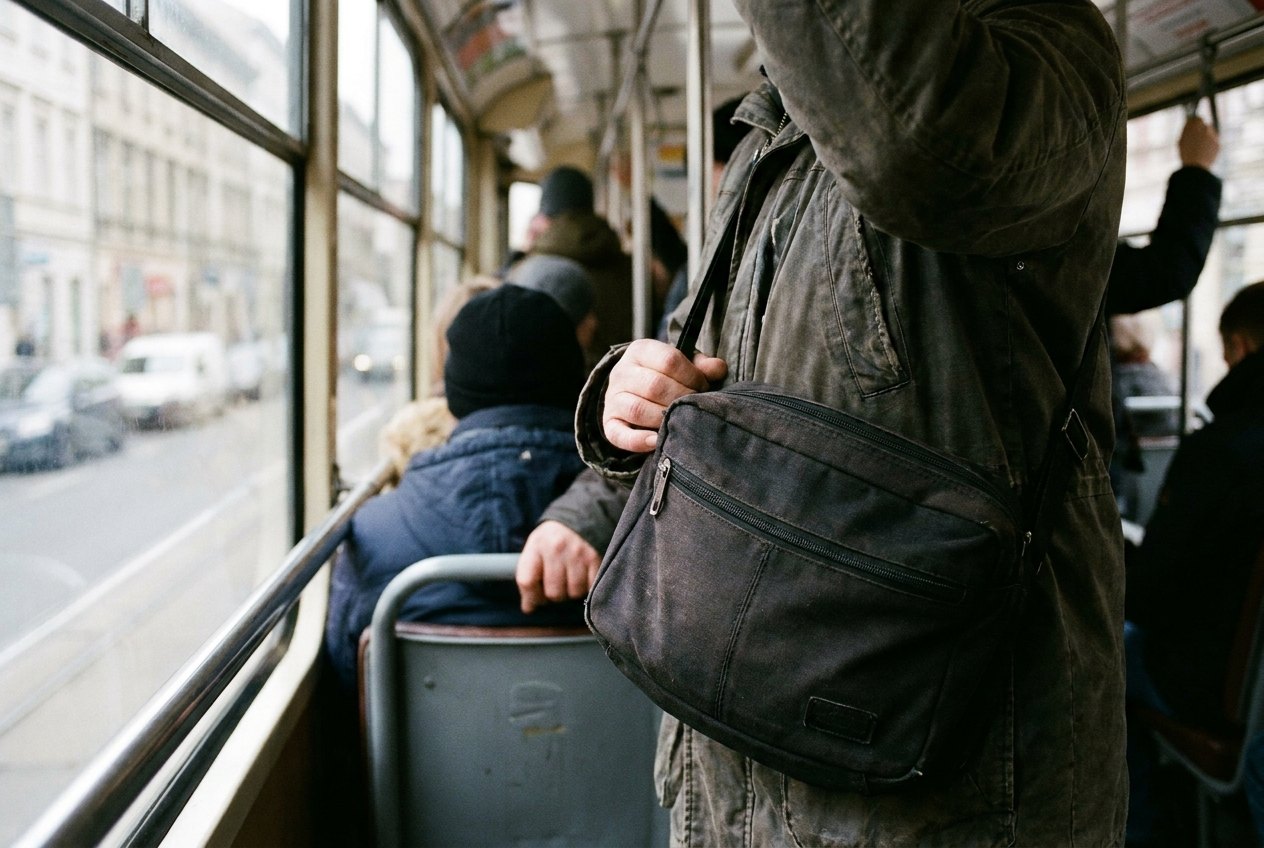
Worth knowingKeep one bank card and a copy of your passport apart from your wallet. If a thief takes the wallet, you can still pay, and the trip carries on.
Where light fingers work
Pickpocketing in European cities is a crime of crowds and distraction, rarely of force. Thieves go where people are packed together and looking elsewhere: crowded trams and metro carriages, especially near the doors; station concourses and platforms; escalators; queues at famous sights; and viewpoints where everyone is holding up a phone. Tram routes popular with visitors, such as the old line 28 described in Lisbon on foot, are well-known working grounds. The summer months bring more thieves along with more visitors.
The moment of greatest risk is usually a transition: stepping on or off a train, buying a ticket at a machine, checking in at a front desk, sitting down at a cafe table and laying a phone beside your cup. Thieves read body language, and someone who looks lost and weighed down with bags is an easier target than someone moving with purpose.
Distraction tricks, in general terms
Most scams come down to holding your attention while someone else takes your things. Common versions include a person with a clipboard asking you to sign a petition; a stranger who spills something on your coat and helpfully dabs it off; someone who finds a ring at your feet and offers to sell it; a friendly person who ties a string bracelet on your wrist and then wants money; and a crowd that presses around you at the train doors and melts away as the train pulls out. At ticket machines, a helpful stranger may offer to assist while watching your PIN, so decline politely and use the machine yourself or go to a staffed counter. Street games where you bet on finding a ball under a cup are rigged, and the lucky winners in the crowd are part of the team.
None of this means treating everyone as a suspect. Notice when a stranger's attention is unusually focused on you, keep a hand on your bag, and walk on. A firm "no, thank you" is enough.
Carry it the dull way
A money belt worn under your clothes is the sturdy home for your passport, spare card and reserve cash. It is for keeping, not for paying, so you should not need to open it in public. Keep a little cash and one card in a front pocket for the day, and leave back pockets for nothing more valuable than a tissue. A day bag with zips that close fully is best worn in front of you in crowds rather than slung behind. In restaurants, loop the strap around your leg or the chair leg instead of hanging the bag on the chair back.
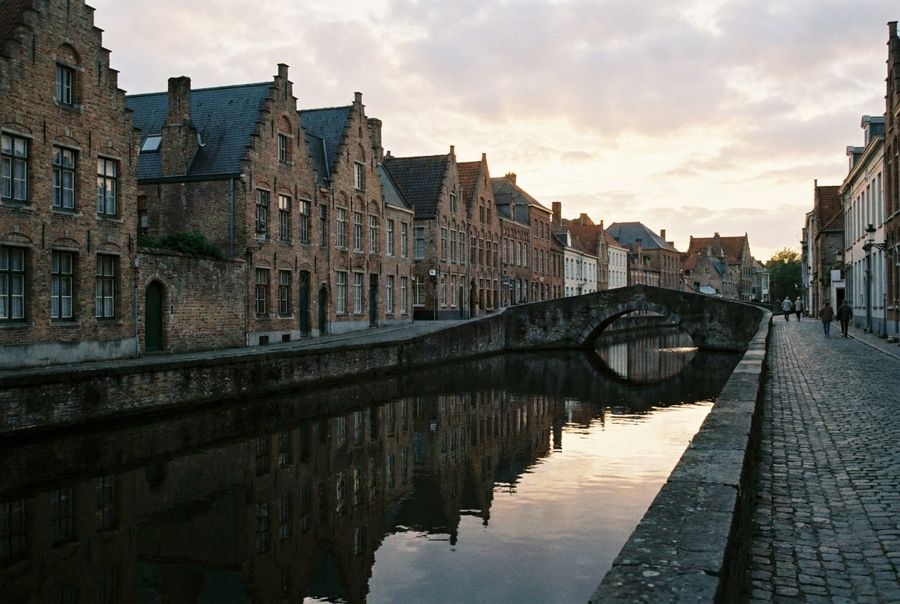 Pairs well withBruges after the day-trippers leave
Leave what you do not need in your room safe or at home, including extra cards and jewellery that draws the eye. Travelling with one carry-on bag helps, because you can keep it close on trains rather than leaving it in a rack at the end of the carriage; Europe by train without the stress has more on keeping luggage in sight on board.
Phones are the new wallets
Phones now tempt thieves as much as wallets do. One left loosely on a cafe table, held out at a viewpoint or tucked in a back pocket on a tram is easy to lift, and in some cities phones are snatched from passing scooters. Use a wrist strap or a cord across your body in crowds, keep the phone in a zipped pocket when you are moving, and step back from the kerb when you stop to check a map. Set it to back up your photos each night, so losing the phone does not mean losing the pictures of the trip.
Copies, cards and backups
Before you leave home, photograph or scan your passport, driving licence and the front of each bank card, and keep the copies somewhere you can reach from any device, plus a paper copy of the passport page stored apart from the original. Write down your bank's emergency number for lost cards, because the number printed on the back of the card is no help once the card has gone. Carry two cards from different accounts and keep them in different places, so a single theft does not leave you without money. Set a passcode on your phone and turn on its tracking feature.
If something goes
Act quickly but calmly. Freeze or cancel cards first, through your bank's app or phone line. Then report the theft to the local police and ask for a written report, which insurers usually require for a claim. If your passport has gone, contact your country's embassy or consulate; they can usually issue an emergency travel document so you can continue your journey or get home. Change the passwords on any accounts that were open on a stolen phone. It is also worth asking at the lost-property office of the station or transport company, in case the item was simply dropped; honest finders do hand things in.
Then let it go. Theft happens to careful travellers too, and with copies, a spare card and a sense of proportion it becomes a bad afternoon rather than a ruined trip. The habits take minutes to learn, soon become automatic, and leave your attention free for the things you came to see.
Filed under good travel habits.