
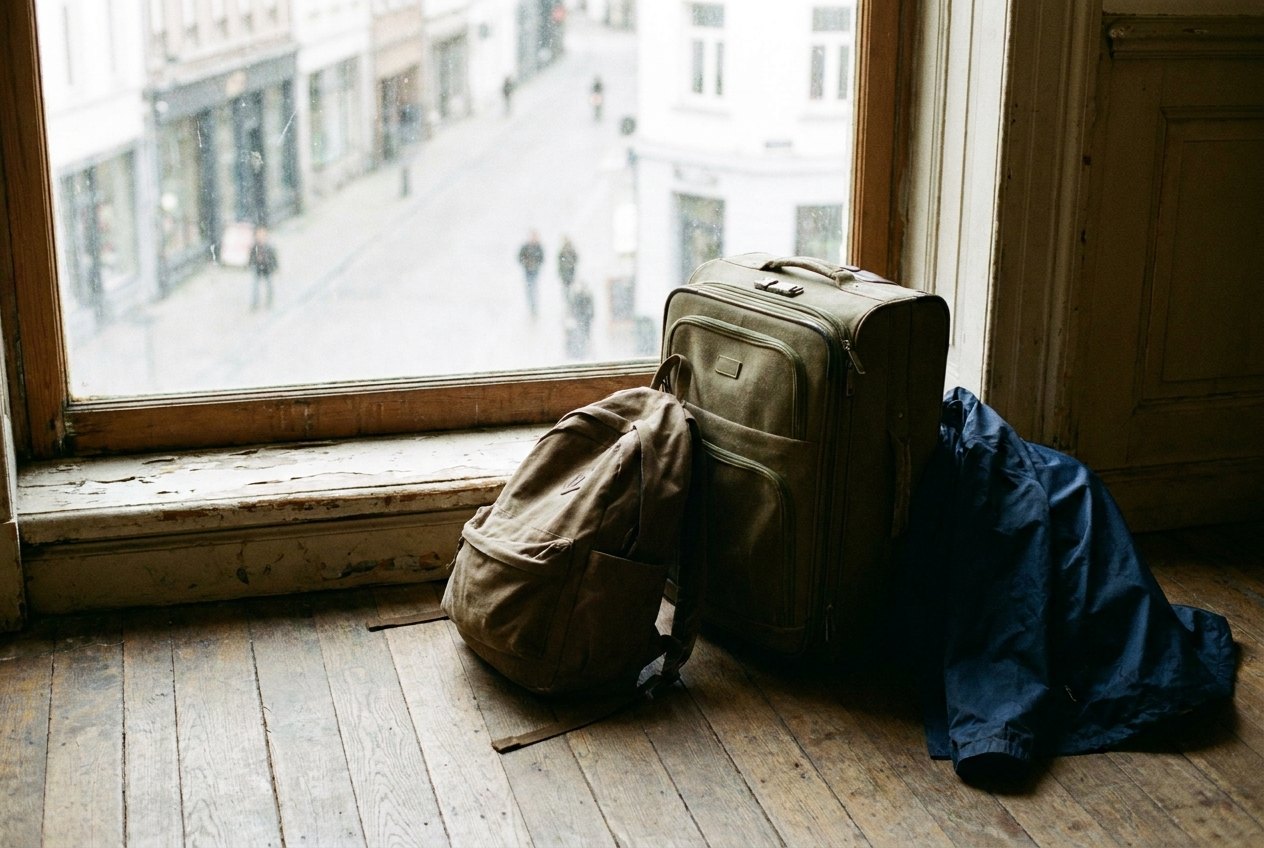
Worth knowingWheels that glide through an airport rattle and snag on cobbles and station stairs; if your route includes old towns, a bag you can carry by hand matters more.
Why one bag changes the whole trip
A second suitcase is not just extra weight. It is the thing you wait for at the carousel, the thing you drag up the spiral stairs of a small hotel, the thing that decides whether you can hop on the first train or have to wait for one with more room. Two people with one carry-on bag each can step off a plane and onto a train within the hour, walk from a station into a car-free old town without hunting for a taxi, and change plans halfway through the trip without much fuss.
Two weeks is a good test. It is long enough that you will need to wash clothes, and short enough that you will not need much beyond what you wear in a normal fortnight at home. Pack for about a week and plan to do laundry once or twice. That single idea does most of the work.
Choosing the bag itself
Airlines publish their own cabin size and weight limits, and they are not the same everywhere. Low-cost carriers in Europe are often stricter than the long-haul airlines, and some sell the overhead-bin allowance separately from a small under-seat bag. Check the rules for every flight on your route before you buy anything, and measure the bag with its pockets full rather than trusting the label.
Within those limits, a soft bag tends to suit European travel better than a hard shell. It squeezes into a crowded luggage rack, slides under a train seat, and does not crack when it is thrown into a bus hold. Many people who walk a lot choose a bag that can be carried as a backpack, because it leaves both hands free for railings and tickets. Wheels are handy in airports and on smooth station floors, but they add weight and work badly on the stone streets of places like Rothenburg's old centre. If you do choose wheels, make sure the bag also has a sturdy handle for carrying.
A small day bag rounds things out. It holds the water bottle, a layer, a paper map and the snacks, and it is the bag you keep in front of you on crowded trams.
Clothes that layer instead of clothes that pile up
The trick is to pack items that work together rather than outfits. Choose two or three colours that match each other, so every top goes with every pair of trousers. A light fleece or thin wool sweater, a packable rain jacket and a warm base layer will cover a surprising range of weather, from a sunny afternoon in Lisbon to a cold, wet morning on a Swiss platform.
- Three or four tops, at least one with long sleeves
- Two pairs of trousers or one pair plus a skirt or shorts, depending on season
- One warm mid-layer and one thin rain shell
- Underwear and socks for about four or five days
- Something slightly smarter for an evening out or a church visit
Fabrics matter more than quantity. Merino wool and synthetic travel fabrics dry overnight and stay fresh longer than cotton. Jeans are heavy, slow to dry and bulky in a bag, so many light packers wear one pair on the plane and leave it at that. For church visits in southern Europe, a scarf or light layer that covers your shoulders is worth keeping in the day bag.
The sink is your laundry room
Washing in the sink sounds like a chore and takes about ten minutes. Use a little soap or a small bottle of travel wash, a flat universal sink stopper, and a stretchy clothesline or a few clips. Wring each item, then roll it tightly in a towel and press down to squeeze out most of the water. Hang it overnight and most light fabrics are dry by morning.
Pack for about a week and plan to do laundry once or twice.
Plan the wash around your itinerary. Do it on the first night of a two- or three-night stay, not the night before an early train. In damp places, or in winter when rooms are cold, things dry more slowly, so give heavier items two nights. Every week or so, a self-service launderette can handle the jeans and the sweater, and it is a good place to sit and read for an hour like a local.
 Pairs well withEurope by train without the stress
Two pairs of shoes, broken in
Shoes are the heaviest things most people pack, so this is where light travel is won or lost. Bring two pairs at most, and wear the bulkier pair on travel days. One should be a comfortable walking shoe with a grippy sole, already broken in at home on long walks. The other can be a lighter pair for evenings, warm weather or giving your feet a change.
Grip is not a small detail. The polished limestone pavements of Lisbon's steep streets are slippery even when dry, coastal paths can be loose underfoot, and old town cobbles are hard on thin soles. If your route includes rough paths, a light trail shoe can serve as both walking shoe and everyday shoe.
What stays at home, and living from the rest
The things that fill a suitcase are usually the things you pack just in case. Most of them can be bought on the road if you really need them: European pharmacies and supermarkets sell toiletries, sunscreen, plasters and basic medicines. Pack small refillable bottles for liquids; limits and screening equipment differ from one airport to the next.
- Full-size toiletries and a hair dryer, which most rooms already have
- A separate outfit for every day
- Thick books, when a phone or e-reader holds dozens
- More than one bulky jacket
- Valuables you would be upset to lose
Keep the things that are hard to replace with you: prescription medicines in their original packaging, glasses, chargers and a plug adapter, a copy of your documents and a card kept separately from your wallet. A small zipped pouch for these makes it easy to check you have everything when you leave a room.
Living out of one bag on the road
Packing cubes or a few light bags keep things findable, so you are not unpacking everything to reach a clean shirt. Keep one for clean clothes, one for worn ones and one for the bits that go in the day bag. Repack the same way every time and you will be out of the room in five minutes.
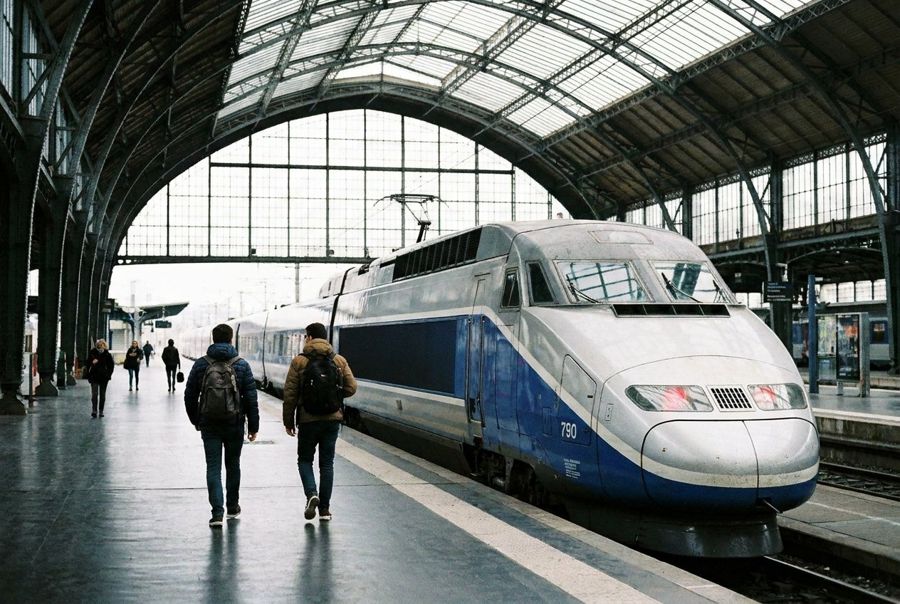
The payoff shows on travel days. You climb the steps to a platform without help, fit the bag on the rack above your seat and keep an eye on it the whole way. On a trip that strings together a lakeside village reached by ferry and a town reached by a branch line, one bag each turns every connection from a project into a short walk. Many travellers who try it once do not go back.
If you are travelling in spring or autumn, layers matter even more, since one day can swing from warm sunshine to chilly rain. That flexibility is part of why the shoulder seasons suit a light bag so well.
Filed under travelling lighter.