
Worth knowingMany Spanish kitchens close between the lunch and dinner sittings. If you are hungry at six in the evening, look for a bar with tapas on the counter.
Market mornings
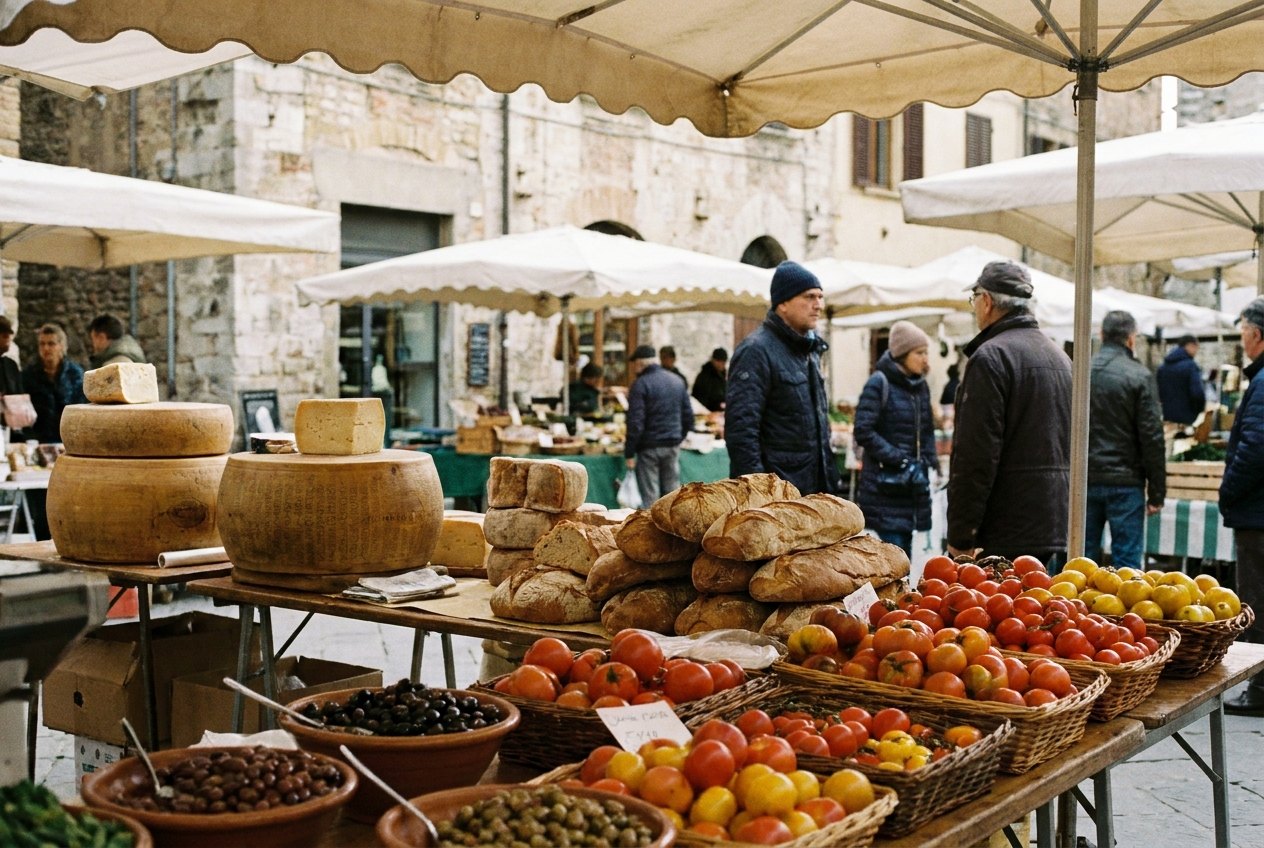
A town's market is the quickest way to learn what people there actually eat. Go in the morning, when the stalls are full and the shoppers are local; by early afternoon many traders are packing up. Look at what is in season, because that is what the cooks in town will be serving that night: white asparagus in Germany in spring, porcini mushrooms in Italy in autumn, cherries and apricots across the south in early summer. Covered market halls in cities such as Florence, Barcelona and Lisbon trade on most days of the week, while smaller towns often have a weekly market day that fills the main square.
Buy a little and ask a little. Stallholders, especially in Italy and France, usually prefer to choose fruit for you rather than have you handle it, so point and let them pick. Many will offer a sliver of cheese or ham to taste. Cash is still handy at small stalls, though cards are increasingly accepted.
Picnics with a view
A picnic is one of the best and simplest meals in Europe. A loaf from the bakery, cheese, cured meat, tomatoes and fruit from the market, and you have lunch for a bench beside the lake at Hallstatt or on top of a medieval wall like the one around Rothenburg. Carry a reusable bottle, a cloth napkin and a small bag for rubbish, and take everything away with you. Some cities restrict drinking alcohol in public places, and in Rome sitting on certain famous steps and monuments is not allowed.
Lunch as the main meal
In much of southern Europe lunch is the big meal of the day, and often the best value. In Spain, the menú del día offers a starter, a main course, dessert or coffee, bread and a drink at a set price, mostly on weekdays at lunchtime. France has its formule and plat du jour, and Italian trattorias often chalk a short list of the day's dishes on a board. Eating your main meal at midday leaves the evening for something light: a few tapas, a slice of pizza, or a picnic supper in your room.
Timing matters most in Spain and Italy. Spaniards typically eat lunch around two or later and dinner from about nine, and a dining room filling up at ten in the evening is perfectly normal in Madrid or Seville. Italy eats earlier than Spain but later than the north, with dinner seldom starting much before half past seven. Northern Europe keeps earlier hours, and in Germany or the Netherlands lunch can be brief and dinner early. Adjust your day to the local clock rather than fighting it, and you will eat better.
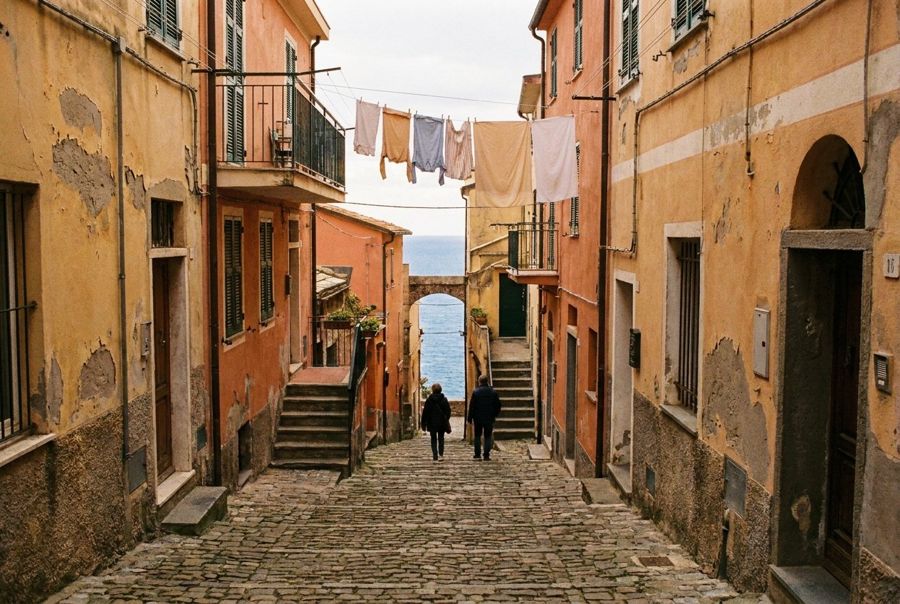 Pairs well withThe Cinque Terre in the quieter months
Reading the bill and tipping
Tipping customs in Europe are lighter than in North America. In many countries service is included in the menu price; in France, menu prices include service by law, and staff are paid a wage that does not depend on tips. Rounding up or leaving a little extra for good service is common and appreciated, but it is rarely expected in the way it is in the United States. Customs vary from country to country, so ask, or watch what the locals do. When a card machine arrives at the table offering a tip option, you can usually choose none or a small amount without any awkwardness.
In Italy, a cover charge for bread and table setting, the coperto, appears on many bills and is not a tip. In Italy and Spain, a coffee drunk standing at the bar usually costs less than the same cup carried to a table. Ask for the bill when you want it. In much of the south, bringing it unasked would seem rude, because the table is yours for as long as you like.
Water, wine and a few words
Tap water is safe to drink in most of Western Europe. In France you can ask for a carafe of tap water with a meal and it normally arrives without charge; elsewhere, waiters may assume you want bottled water, still or sparkling, so say clearly if you would rather not. Many Italian and Swiss towns have public fountains with drinking water, handy for refilling a bottle, but look for a sign saying the water is not drinkable before you fill up.
If your room has a small kitchen, the market becomes even more useful. A pan of pasta with ripe local tomatoes, a wedge of cheese and a bottle of regional wine make a supper as good as many restaurants serve, eaten at your own pace with the window open.
House wine by the carafe is usually a sound, modest choice in wine-growing regions. Learn "please", "thank you" and "the bill, please" in the local language; staff notice, and the meal goes better for it. Coffee has its own customs: in Italy, cappuccino is mostly a morning drink and a small espresso is the usual way to finish a meal. Nobody will refuse to make you a cappuccino after dinner, but you may be the only one ordering it. When the place you hoped for is full, the one around the corner that is busy with locals is often just as good. And after a day climbing Lisbon's hills or walking a coastal path, a long lunch is not an indulgence. It is part of the plan.
Filed under good travel habits.